Showing posts with label off the mat. Show all posts

Wednesday, November 4, 2015

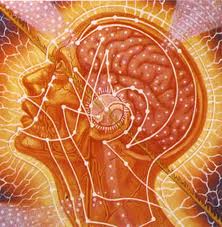
Yoga for Your Brain


I often speak in class about how the postures that we practice on the mat create a change in our brain chemistry, with noticeable and measurable effects on our lives. Here is an article from the Kripalu Center website that shares some of the latest research on yoga and the brain:

How Yoga Changes the Brain
by Angela Wilson

For many of us, the practice of yoga helps us feel calmer and more soothed. We go into class feeling stressed from the day’s activities, and we leave with a little more ease. So what’s happening in the brain, as a result of yoga, that produces these feelings? With the steady rise in the number of people practicing yoga—from 13 million in 2007 to more than 20 million today—researchers have begun to focus their attention on how yoga actually changes the brain. The results echo what many of us experience: Studies show that yoga increases relaxation in the brain, improves areas of the brain that help us manage pain, and protects us against age-related decline. Together, these benefits begin to reveal the scientifically validated effects of yoga practice on brain health.

Yoga Floods the Brain with Relaxation

To investigate why yoga induces feelings of calm and peacefulness, Dr. Chris Streeter and her research team from Boston University set out to discover whether practice helps our brains produce more GABA, a neurotransmitter that increases feelings of relaxation. When we don’t have enough GABA in our brains, we feel anxious or depressed; medications such as Xanax work by upping GABA levels.

To answer this question, the team had one group of subjects do yoga for 60 minutes, while a control group read for an hour. Both groups were scanned in the MRI pre- and post-intervention. Would yoga release more GABA in the brain than reading?

The results were an unequivocal yes. The yoga group had a 27 percent increase in GABA, while the readers had no increase. But to rule out the possibility that any type of physical movement can increase GABA levels, Chris ran a second study, comparing the effects of yoga with those of walking. Again, the yoga practice showed greater changes in GABA levels in the brain. Not surprisingly, the increase in GABA was correlated with self-reports of decreased anxiety.

Studies such as these suggest how yoga might be used as an adjunct treatment to mental-health conditions such as anxiety and depression, and point to how yoga positively impacts the brain.

Yoga Improves Regions of the Brain that Manage Pain

Yoga has also been shown to improve pain tolerance. A study conducted by a group of pain experts found that, compared to matched controls, yogis could tolerate pain twice as long. This subjective difference was correlated with distinct brain differences in both of these groups: The yoga practitioners had larger insular gray matter volume than those who didn’t do yoga. The insula is a region of the brain in the cerebral cortex that helps regulate body temperature and maintain homeostasis; is related to perception and self-awareness; and has a role in regulating the parasympathetic nervous system, the branch of the nervous system that helps us feel calmer and more relaxed.

Researchers believe that yoga offers a combination of physical practice, conscious breathing, and cognitive frameworks (for example, the idea of seeing pain as “sensation,” without labeling it as “good” or “bad”) that allows us to manage and tolerate pain with more ease.

Yoga Protects Against Age-Related Decline

A 2014 study by a team that included two researchers affiliated with the Kripalu Institute for Extraordinary Living, Tim Gard and Sara Lazar of Massachusetts General Hospital, found that the long-term practice of yoga has several buffering effects on age-related decline. The study compared longtime yoga and meditation practitioners with control subjects of the same age and demographics. Specifically, the researchers were curious whether or not yoga and meditation would help maintain fluid intelligence—the ability to cope with novel situations and engage in abstract thinking—a function that notoriously declines with age.

To explore these questions, Tim and Sara invited 16 Kripalu Yoga practitioners, 16 vipassana meditators, and 15 controls into the lab to have their brains scanned with MRI/fMRI technology and to undergo cognitive testing for fluid intelligence. The yogis and meditators all had at least 20 years of extensive practice under their belts (total practice hours ranged from 7,400 to 13,000 each). Control subjects were matched for age, education, exercise, race, and reading ability.

Results indicated that, as hypothesized, long-term practice of yoga and meditation buffered against age-related decline. Both yogis and meditators had higher average scores on fluid intelligence tests than controls. In addition, these two groups had higher scores on mindfulness questionnaires than controls. Previous studies suggest that both fluid intelligence and mindfulness are related to cognitive flexibility (the ability to adapt to and cope with stress). Additional studies might tweeze out more differences between the groups, but these initial results indicate that the long-term practice of meditation and yoga protects cognitive abilities well into older age.

Studies such as these are essential in understanding not only that yoga works, but also how it works. These findings add to a growing body of research on how yoga might be beneficial not just for healthy people, but for clinical populations—those suffering from depression, anxiety, even dementia. Continued investigation in how and why these practices induce change will help us deepen our understanding of their clinical applications for improved brain health.


Angela Wilson, MA, is a Kripalu Healthy Living faculty member who teaches on the science of yoga. She is a licensed mental health counselor and has contributed to Yoga International and Yoga Therapy Today, writing about the intersection between yoga, Western psychology, and science.

Monday, March 25, 2013

In Class with the Infinite


At the beginning of March I attended a weekend workshop with Erich Schiffmann, Internationally renowned yoga teacher and “star” of the 1994 video  Yoga Mind & Body­­­­­­­­­­­­­­­­­­­­­ with Allie McGraw.

At first glance, Erich Schiffmann does not look like a typical master yogi, with a chiseled body and intense gaze. Instead,, he looks like a big teddy bear, with long curly locks that frame his soft face. But listening to him speak for even just a few minutes, his wisdom and spiritual depth become clear. 

Although he teaches regular classes at his studio in Venice, CA,  his focus has become less about postures and more about living yoga through learning to tune in to Spirit’s wisdom and grace. When one becomes adept at doing this, asana practice becomes an expression of the Infinite Mind.

This practice, which Erich calls Freedom Style Yoga,  is very much akin to Kripalu’s practice of Meditation in Motion—listening to where prana wants to flow and following that.

The following is a distillation of the notes I took while attending the recent program at the Kripalu Center for Yoga and Health in the Berkshires.  More of Erich’s teachings can be found at www.movingintostillness.com .

Yoga is more than something we do for an hour or so at the gym, a couple of days per week. Yoga is a lifestyle.  But the “yoga lifestyle” does not require one to wear Lululemon clothes, become vegetarian, and stand on your head every morning.  It is more about a commitment, day after day, to be aware of “Big Mind.”

The Sanskrit word yoga means to “yoke” or “join.” What we are doing when we practice yoga is joining, or yoking, small mind to Big Mind.  Erich likens this to plugging into the internet--we can use our minds, our intention and focus, to “get online.”   

Small mind, however, is so often full of static and distraction. The practice of meditation (which is one of the central practices of yoga) helps us to learn to think less and listen more, so the “download from Big Mind can come through. “

Erich says that the main reason to meditate is that it allows us to “slide into a feeling of peace.”  He teaches that there are three ways to practice meditation:

1)Sitting quietly. He suggests a few minutes every morning and evening.

2) Doing asana practice. Let your posture flow be a meditation-in-motion. Structured practice should eventually flower as intuitive practice. Once we know where to put our feet and how to align our hips and spine, etc, this focus on alignment can then blossom and become alive. We can move beyond “Simon Says” to an experience of channeling the poses, guided from an inner knowing.

3) The Rest of the Time (which is most of the time!). We can practice meditation while we are cooking, shopping, driving (eyes open, of course!), and in all of our daily activities. What this means is that, throughout the day, we practice thinking less and listening more, so we can “get online.” Erich emphasizes that if we are listening and aware, we are online all the time. We are connected if we are conscious.

With regard to pranayama (breathing) practice, Erich teaches a very simple, basic technique:  just  breathe in like you are inhaling the fragrance of a rose. He says that there is no need to do anything fancy. But be aware that it’s not just air you are breathing—it’s Life Force. He invites us to let that Life Force tell us what to do, rather than manipulating it.

The repetition of mantras is a practice that can help still the mind. You can use any traditional mantra that calls to you, or make one up that feels appropriate.

When mantra works, eventually it will dissolve. When any discipline works, ultimately the form dissolves, and the energy of the practice takes over. Erich calls this the “flowering” of one’s practice. This is true for asana, mantra, meditation, or any other discipline. We first focus on the mechanics of the practice, and then we let it flower. We hone our instrument and our skill set, and then we open ourselves up to become a channel for the spirit of the practice to come through.  In this way, we may find ourselves inventing new poses, just as the original yogis did.

When we first start a yoga practice, many of us prefer having a teacher guide us. We come to class and listen carefully to every move the instructor guides us to do, focusing on proper alignment and getting it “right.”

Erich emphasizes that such training is important.  Get good at it—isolate specific movements and become deeply attuned to what is happening in the body. Then, let it flower as intuitive practice. Our training should culminate in letting the energy dictate the flow.  So we begin with structure, which eventually dissolves and blossoms into a more organic, free-form movement with heightened sensitivity.

“Advanced” yoga means learning to trust yourself.  “Knowing flows in…then trust yourself to do what you need. Dare to do as you are guided to do.” Through meditation, we get better at paying attention to this guidance.

When we practice on our own and begin to allow ourselves to be guided from within, it’s a good idea to bring a pen and paper to our practice space. Erich also suggests a tape recorder, or even a video camera, to capture the cool patterns and original sequences that will be channeled through us. “You’re in class with the Infinite. Take notes!”

With all that said, Erich says that asana practice is “highly overrated. Being more bendy doesn’t make you enlightened.”  The essence of yoga is about life—about learning to be “tuned in.”

One of the ways we can practice tuning in and developing this intuitive power is to pay attention to how we make decisions, however small.  Erich says, “Whenever you have a choice or decision to make, slow down and tune in. Don’t make up your mind right away. First, pause, ‘get online’ and ask for guidance.

Whenever you find yourself having to make a decision about something, it means that you are not clear. If you were totally clear, then there would be no decision process—you would just intuitively know and act accordingly. But when you are faced with a choice, then there is a momentary lack of clarity.”

So, tuning into guidance is the practice of listening and waiting until we are completely clear. At that point, it is no longer a choice. It’s a clear direction—“the choiceless choice.” But Erich stresses that “we don’t make up our own mind—we ‘get online’ and ‘google’ the answer.”  Googling is Erich’s quirky and endearing way of describing prayer, or downloading God’s guidance with regard to each situation.

Getting online and googling is something we must begin to practice with the relatively easy decisions in our day-to-day life. Do I put on the blue or red shirt? Eggs or cereal? Bowling or a movie? Pause, ask the question, and then follow the choice that “glows.” Think less, listen more. Use your thinking to listen more.

When you get “online,” you begin to connect with the Awakened Ones who are already online (It’s kind of like a chat room with the great sages—Jesus, the Buddha, and all the great saints and boddhisattvas.  Our spiritual practice is about staying online and connected with these great beings and asking for help.

Three things to practice every day:

   Relax. Practice relaxing all day long. Become aware of the current tension level in your being, and then use the power of your exhale to allow it to diminish. Awareness and breath is a powerful way to release tension.

  Practice Love More. Begin with things that are easy  and natural for you to love, and love them more than you normally would. Pet the cat with more conscious affection. Savor your food. You will start getting wowed by the “asanas of life” more. Then, when you are not being loving, you will notice the contrast more easily.

“Love” is the willingness to recognize that which is real and true. Therefore, “I love you.” means “I am willing to recognize that which is True about you (your Divine Nature).” Be willing!

 Trust Your Insights. Learn to trust your deepest impulses about what to do. This becomes easier to do when you are relaxed. Don’t worry about explaining your choices to others.

Erich also spoke about the meaning of the word “God.” The dictionary definition of “God” is “Supreme Being.” Now, if we think of this Supreme Being as a noun, that creates an anthropomorphized image of God, and implies duality and separateness. I am here, a lowly human, and God is up there in the sky and has dominion over me.

But if we think of Supreme Being as a verb, then wow!—it becomes a way of being in the world that is accessible to and inclusive of everyone.  We can cultivate Supreme Being as a way of moving through our lives, cultivating exquisite presence and an open heart.

Each of us is a finite expression of the Infinite. The great Totality is temporarily showing up as you. You only exist because the Totality exists as you. 


When you feel the loving goodness inside yourself as yourself - as who or what you really are, you will acquire new self-appreciation. You will realize there is no basis for being self-critical or self-condemnatory, or for harboring guilt for some known or unknown transgression in the past, and that you have done this until now simply because you have accepted as true certain erroneous ideas about yourself. It's obvious to you now that when you wipe the slate clean and take a look at yourself for yourself, when you experience yourself as you actually are, you encounter a very different you from the "you" you thought you were. It now makes sense to disbelieve what was never true and embrace the new self-appraisal. You are You; God's specific Self-Expression.    ~from Moving Into Stillness, by Erich Schiffmann.


Tuesday, October 4, 2011

Finding Your Edge


Last year I went to a yoga festival in California, and I spotted a young man with a T-shirt that had the following words printed on the front:

LIFE BEGINS AT THE END OF YOUR COMFORT ZONE

How true! When we are faced with discomfort, whether it be physical, emotional, or the myriad stresses and challenges that life brings, that’s where the growth happens. There’s a hidden gift in it, as we are shaken out of our habitual ways of thinking and acting, and we are called to stretch beyond what we thought was possible for ourselves.

I’m not speaking here of going WAY beyond the comfort zone, to the point where we are in excruciating pain, but rather to the place where we feel a little pull, a little heat, a little squirmy. It’s that place where we might want to run the other way, but if we stay right there, that’s where the jewel is shining. The end of the comfort zone is that place that calls us to pay attention, to wake up to what’s happening, and to respond with whatever is needed. And often what is needed is more presence, compassion, and perhaps some surrender, so that we move beyond the resistance or numbness to life.

In yoga, we have plenty of opportunities to practice this on the mat, as we explore the boundaries of our physical comfort zone.  It’s what is referred to as finding our “edge”—the place in a posture or stretch where we meet the limit of our flexibility or strength.  At the edge we feel increased sensation, more aliveness, more heat.  It’s the place where we are called to show up with deeper, more mindful breaths. In this practice, we don’t push ourselves over the edge to the point of pain.  If our shoulders tense up and we find ourselves grimacing, then we know we have gone too far (remember the yogic principle of ahimsa, or non-violence!)

It doesn’t matter how deeply we can go into a posture. If we are meeting our edge and breathing into it, allowing the body and mind to soften, then we are getting just as much benefit out of the posture as the person on the next mat who looks like they are posing for the cover of Yoga Journal. It’s an internal inquiry, rather than an external goal.

In Kripalu yoga there is a model of mindful practice known as BRFWA, which is an acronym for Breathe, Relax, Feel, Watch, Allow.  Anytime we are deepening into a posture and find that we’ve met our edge, we can work with BRFWA:

BREATHE: Reconnect with the sensations in the body through attention to inhalation and exhalation.  Engage deep 3-part yogic breaths, and if ujjayi (ocean breath) is part of your practice, engaging that pranayama helps encourage focus and presence.

RELAX:  Soften muscles, reduce any effort around mental activity. Open to energy moving through resistance in the body/mind.

FEEL:  focus awareness on the sensations, feelings, and thoughts flowing through the body/mind.  Avoid engaging in the story of these thoughts and feelings—simply experience them as energy passing through.

WATCH: Cultivate “witness consciousness” by observing your experience with  non-judgmental awareness and compassion.

ALLOW: Let your experience be just what it is, without any need to judge it, change it, or fix it. Energy integrates on its own.

The methodology of BRFWA allows us to sustain poses longer as we learn to ride the wave of sensation.  You may also notice that your edge shifts as you hold the pose and stay present with what arises, and the edge will also change from practice session to practice session, over time. The good news is that we are ever changing organisms, and that when we pay exquisite attention, every moment is new.

Once we become experienced at using the BRFWA methodology on the mat, we can take it into our lives, where there are countless opportunities to practice—in relationships, work, health, and more.  In this way, we can let life be our yoga, and when we come up against an edge, we can be grateful for this invitation to be fully alive.


Being Present

Breathe, relax and feel;
take time to slow down
the pace of life. Watch the
rise and fall of moods, the
birth and death of dreams.
Feelings and sensations seem
so real, yet they shift like
changing clouds, and flow
with the high tide out to sea
again. Allow it all to be, no
need to grasp or push away.
Present with each moment,
the whole of you, body, mind
and soul, opens to receive.


~Danna Faulds, from Go In and In: Poems from the Heart of Yoga


Tuesday, July 19, 2011

Authenticity


Henry David Thoreau said, “We are constantly invited to be who we are.”

I think that’s a beautiful description of Kripalu yoga, which is an inquiry into who we are, through movement, breath, and awareness. When we practice on the mat, we are engaged in a process of discovery as to who we are in this moment, and then the next, and the next. The same applies to our practice off the mat, as we work to live ethically, mindfully, heartfully.

The yogic view sees the self as being many-layered, having a physical body, a subtle or energy body (which includes the thoughts, emotions, intuitive wisdom, and the circulation of life force) and a causal body (expansive and blissful).  In this exploration of our many-layered selves (see my post on the 5 koshas for a more in-depth discussion), we have the opportunity to live our lives from a more authentic place.

One of my teachers at Kripalu, Dinabandhu Sarley, says that when what we think, what we feel, what we say, and what we do are all in alignment, something transformational happens—it’s called authenticity.  Just as we practice physical alignment on the mat to allow prana (life energy) to flow freely through us, practicing alignment in all aspects of our lives allows us to be a clear, open conduit for prana to flow through us and into the world through our actions.  Our ability to be powerful in our lives is contingent upon our ability to bring those four areas into alignment.

When any one or more of those areas—thought, feeling, speech, action-- are out of sync with the rest, the conduit becomes blocked—it’s like a garden hose that gets kinked in 4 places.  We can’t be truly at peace or fully alive if we are lying to ourselves, not being truthful with others, or otherwise “in the closet” about who we truly are. Our life force becomes impeded and depleted.

Ultimately, a yogi’s life becomes focused on the question: “How do I become free, whole and alive?” Yoga gives us tools with which we can practice living in alignment, such as the yamas and niyamas, which offer ethical guidelines for our interpersonal relationships and personal commitments. In short, they call us to speak the truth, honor one another, and live with intention and direction.

Practicing authenticity takes courage, as well as much unlearning of unskillful ways of being that may have become deeply ingrained.  Being authentic does not guarantee that we will be liked. In fact, we are likely to ruffle some feathers and perhaps alienate some people who are not ready to receive the rigorous honesty that it entails. When we tell the truth, in the deepest sense, things begin to re-arrange in our world. Things, people, and activities that don’t serve us clear out of the way, making room in our lives for What Really Matters.

Ultimately, authenticity is about living from Love. As yogis, may we support one another in this discovery of the truth of who we are.

Everything will line up perfectly when knowing and living the truth becomes more important than looking good. ~Alan Cohen

Seek out that particular mental attribute which makes you feel most deeply and vitally alive, along with which comes the inner voice which says, ‘This is the real me,’ and when you have found that attitude, follow it. ~William James


Tuesday, July 12, 2011

Stability and Vulnerability

Hello Dear Yogis,

In our Wednesday and Thursday classes this week, we'll be doing some inquiry around the relationship between stability and vulnerability, and exploring the dance of risk-taking and finding our ground. We engage in this play of opposites on the mat in our asana practice, as we move from poses where we feel stable, safe and strong (such as mountain, warrior 1, low lunge) to poses where we take some risk, intentionally choosing instability and vulnerability (balancing poses, deep backbends, and inversions such as tree, camel, and headstand). Risk is a necessary part of growth, both in yoga practice and in life.


Think about it-- you would have never learned to walk if you hadn't been willing to fall down again and again, and again! When you were one year old, you just kept picking yourself up and trying again. You never said "what's wrong with me--I can't get this right, I'm such a bad walker" nor did you compare yourself with other toddlers who were already walking. You just got up and took the next step, embracing the moment-to-moment adventure of learning to walk.

Reclaiming that spirit of adventure and the childlike willingness to fall on our butts is something we can cultivate in our grown-up endeavors. Taking risks, whether they be in business, in love, or in sport, is part of being fully alive. And knowing when to come back to center, to pull inward and ground ourselves, is an equally important life skill.

Asana practice allows us to play, in a safe and supportive setting, with moving back and forth between  groundedness and vulnerability. We start with familiar postures that feel good, where we can feel our power and strength, and then we stretch ourselves--literally and figuratively--into something that feels a little scary, unknown, or beyond our reach.

Sometimes in life we choose vulnerablity consciously, and other times s%&t happens, and we find ourselves blown open. Yoga practices such as asana, pranayama, and meditation are tools we can use to help us come back to center during those challenging times.

Being vulnerable means being open-- to change, to grief, to loss, to joy and love, to whatever shows up,  and knowing that, in the midst of all of it, there is a still, peaceful center that always welcomes us home.

I'd like to share the prayer that I read in class this morning, by poet Danna Faulds, from her book Limitless:

I pray to stay open today. Open to the unrestrained energy of now. Open to mystery and power. Open to whatever comes. Open to routine and surprises. Open to moving past my first reactions. Open to my imperfections and the divine spark that underlies them. Open to wonder and the everyday grace of life unfolding as it does. Open to events and circumstances that I like, and those I don't. Open to fatigue and overflowing energy. Open to listen and to speak. Open to love in all the ways it manifests. Open to give and to receive. Open to seasons changing, priorities rearranging, nothing staying the same for very long. Open to letting beliefs dissolve into the ether. Open to the direct experience of truth. Open to forgetting and remembering. Open to life and open to death. Open to seeing old patterns and letting them go. Open to fear and courage, ease and difficulty. I pray to stay open.

Together, may we be open and willing to share this yoga of life.

Tuesday, May 10, 2011

Cultivating Prana Flow

Hello Dear Yogis,
 
It's an absolutely magnificent spring day here in Ithaca, and the forecast predicts glorious weather for the next several days. Given that yoga is a practice that involves our whole being and life, consider taking your yoga outside. I'm talking about much more than dragging your mat outside and doing sun salutations (although that is a wonderful way to greet the day!). Yoga is about so much more than postures. It's about being fully alive, drawing upon all that is available to us to support the flow of the life energy(prana) in us, through us, and around us.
 
Prana is life force - the stuff of those million, zillion stars circling and exploding. Human beings receive it directly into the body through the air. We take it in other ways as well - through live foods such as fresh fruits and vegetables, through fresh water, through living, breathing, trees and vegetation, and, if we are open to it through the love of other people and creatures. We probably take it in more mysterious ways, too, I think - through music, the sound of inspiring words, and perhaps through beautiful sights.
 
~Stephen Cope
 
Prana is the first and most essential nutrient that we need. The good news is that it is all around us, and we have plenty of opportunities to cultivate it and invite it in. Here are some simple ways you can increase the flow of prana, off of your yoga mat:
 
  • Spend time by a waterfall, at this time when the abundant rains and the melting snows have given rise to a powerful flow, and feel the spray on your face.
  • Sit under a magnolia tree and breathe deeply. Take in the fragrance like it's nourishment for your soul (it is!).
  • Let your eyes delight in the colors of all that is in bloom everywhere. Look deeply and be grateful, as these ephemeral blossoms will soon fall to the ground.
  • Prepare and eat a salad of locally-grown baby greens.
  • Enjoy a good belly laugh. Laugh for no reason.
  • Share a big,warm hug with someone today. If there's no person to fill that role today, embrace a pet or a tree.
  • Listen to birds, and sing back to them. Sing your joy of being alive, in a spontaneous, made-up language.
There are infinite ways to invite prana into your being each and every day. Let your practice be deep and wide, on the mat and in the beautiful world around us. Let your yoga be your life.
 

Tuesday, February 1, 2011

Satya

Hello Dear Ones,

In a recent post, we began an exploration of the yamas and niyamas, or restraints and observances, which are an essential piece of the yoga lifestyle. I shared a little bit about ahimsa, or the practice of non-violence. Today I'd like to speak about another one of the yamas, the practice of satya, or "truth."

On the most basic and obvious level, satya means not lying. It means telling the truth. We fess up and come clean when we've made a mistake. We practice saying what we mean, and meaning what we say. We strive to be honest in our words.

Where it gets tricky is when satya bumps up against ahimsa. In our zeal to be brutally honest, is our truth-telling causing hurt to another person? When do we need to temper satya with gentleness and tact? For example, do we tell Aunt Bertha that the sweater she sent is ugly and we would never wear it? Or do we lie and say how much we love it?  How do we find the skillful language that balances being honest and kind? 

On a deeper level that pervades all aspects of our lives, the practice of satya calls us towards authenticity.  It means being true to ourselves. not hiding or pretending to be someone else, and not being afraid to speak out and show who we truly are.

One of my teachers at Kripalu, Dinabandhu Sarley, says that something powerful happens when what we say, what we think, what we feel, and what we do are all in alignment. That power is called authenticity. One's ability to be effective and fully alive is contingent upon one's ability to be in alignment, or authentic. When there is a disconnect between these areas--when we are doing/thinking/feeling/saying all different things--our life energy becomes blocked. We become like a hose that is kinked in 4 places.

So, satya is being authentic--bringing our thoughts, words, feelings and actions into alignment. This allows prana to flow through us unimpeded, making available to us a life that's filled with more power. Just as alignment is important in asana practice, it's equally (if not more) important in how we move through the world off the mat.

On a more expansive level, satya calls us to seek spiritual truth, to discover the Divine Oneness that holds everything together. The highest expression of satya would be to transcend the world of illusion and awaken to the deeper truths of Reality--to see the True Self beyond the limited, egoic self. Satya is being who we truly are.

When you seek the Truth, you are seeking God. Truth is God. Truth exists; so too, God exists. Truth must be considered as life giving as breath itself. Just as a person with no breath in him becomes useless, life without Truth is useless and becomes a dwelling place of strife and grief. Believe that there is nothing greater than Truth; nothing more precious, nothing sweeter and nothing more lasting. ~Sathya Sai Baba


Some questions for self examination with regard to satya might be:

  • Is there an area of my being that I'm afraid to let others see? Am I "in the closet" about who I am? If so, what impact has that had on my life?
  • Are there areas of my life where I don't "walk my talk"? In what ways are my actions inconsistent with my speech?
  • What are 3 ways that I can be more true to myself?
  • What are 3 ways that I can be more truthful to others?
  • Is there someone I've lied to, in either the recent or distant past, that I need to come clean with and to whom I need to make amends (remember, making amends clears the way toward our own freedom)?
  • What are the ways in which I do honor my truth? What are the ways that I do speak, act and live authentically?

Your time is limited, so don't waste it living someone else's life. Don't be trapped by dogma - which is living with the results of other people's thinking. Don't let the noise of other's opinions drown out your own inner voice. And most important, have the courage to follow your heart and intuition. They somehow already know what you truly want to become. Everything else is secondary.   ~Steve Jobs

If you tell the truth you don't have to remember anything. ~Mark Twain


Wednesday, January 26, 2011

Ahimsa

Last week I spoke of the yamas and niyamas, the restraints and observances outlined in the 8 limbed path of yoga.  I'd like to share with you some reflections on ahimsa, the first of these restraints.
Ahimsa means non-violence, or non-harming. On the most gross and obvious level, it means refraining from killing or doing bodily harm to others. As we examine ahimsa on more subtle levels, we see that it also involves refraining from words and thoughts that project violence toward others and ourselves. In its deepest expression, ahimsa means the complete absense of negative thoughts toward self or other, and a pervasive feeling of love and compassion for all beings.
The principle of ahimsa inspired Ghandi's non-violent resistance to British rule in India, which in turn influenced Dr. King's leadership of the civil rights movement in the U.S. Jesus' teachings were also ahimsic, although from a different religious framework.
Our lives offer us plenty of rich opportunities to explore the many layers of ahimsa. Some questions for inquiry:
  • How do my food choices and my habits of eating, driving, and consumption impact upon animals, the earth, and other humans? In what ways do I contribute to exploitation of the earth and its populations?
  • What are the subtle and not-so-subtle ways that my language may be tinged with critical, angry and judgmental words, or words that in some way cause discord? 
  • Am I "shoulding" on myself and others? How does that affect my relationships?
  • Do I engage in habitual negative thinking? What impact does that have energetically on myself and others?
  • Do I allow others to be unkind, harmful or violent towards me? If so, how can I take back my power in a way that is love-based?
  • What ways am I practicing ahimsa in my life? In what ways am I kind, loving and compassionate toward myself and others?
  • On the mat: How can I practice ahimsa? Can I move in and out of challenging postures with utmost care, respect and compassion for myself?
Examining our lives with regard to ahimsa is NOT about making ourselves feel guilty, because NO ONE, in pursuing this inquiry, will come up completely innocent. When we become aware of the areas where we have fallen short, we can practice ahimsa by cultivating compassion and forgiveness for ourselves. By nature, our lives have an impact on other beings. The practice of ahimsa calls us to be more mindful and aware, and it is a lifelong adventure.
"Strictly speaking, no activity and no industry is possible without a certain amount of violence, no matter how little. Even the very process of living is impossible without a certain amount of violence. What we have to do is to minimize it to the greatest extent possible." ~Mahatma Gandhi
The peace in the sky, the peace in the mid-air, the peace on earth, the peace in waters, the peace in plants, the peace in forest trees, the peace in all Gods, the peace in Brahman, the peace in all things, the peace in peace, may that peace come to me. ~ Rig Veda X

Wednesday, January 19, 2011

Ten Invitations

Hello Dear Friends,

In the last post, I wrote about the 8 limbed path of yoga, as described in the 2000 year-old Yoga Sutras of Patanjali. Interestingly, the first two limbs of yoga practice are not the postures and breathing that we focus on in class(those are the 3rd and 4th on the list) The practices of yama and niyama (restraints and observances) are presented as the first two limbs. There are 5 restraints and 5 observances, which are essentially a code of personal ethics and guidelines to live by. Some call them the do's and don'ts of yoga, and they've also been called the "ten commandments" of yoga. In brief, they are:

YAMAS
Ahimsa (non-violence)
Satya (truth)
Asteya (not stealing)
Brahmacharya (energy management/moderation/celibacy)
Aparigraha (non-greed, non-possessiveness)

NIYAMAS
Saucha (purity, cleanliness)
Santosha (contentment)
Tapas ("fire" or "heat" of self-discipline, exerting effort)
Svadhyaya (study of scripture and of oneself)
Ishvara-Pranidhana (Surrender to God)

In Kripalu yoga, the yamas and niyamas are not seen as commandments, but rather as invitations into inquiry. They call us toward an exploration of what shifts in our lives when we take on them on as dedicated practice. It is said that, just as postures and breathing allow the healing energy of prana (life force) to come into our physical bodies, living by these guidelines creates an opening for prana to flow more freely through us emotionally and spiritually.

Each of these restraints and observances is going to be embraced and expressed differently by each person. For example, most of us would agree that Ahimsa (non-violence) means that we refrain from killing or doing bodily harm to another person. But what about eating meat? For some, a vegetarian diet is an essential piece of practicing Ahimsa. For others, it may mean simply choosing to eat only meat that is raised sustainably and humanely.

And Brahmacharya traditionally has meant celibacy, but has come to be interpreted as "energy management".  It means using our sexual energy responsibly, as well as other forms of energy. We examine how we are using and expending our life force. Are we making choices that deplete our life energy, or are we learning to conserve it for optimal living?

Tapas, or self-discipline, is going to look different for each one of us as well. The word Tapas actually means "fire" or "heat." With regard to yoga practice, it involves willpower, endurance, and austerity--exerting burning effort in our practice. Each one of us is called to examine what that will look like for us, and to what depths we want to take our sadhana (spiritual practice). There is no right or wrong here--only an invitation to examine our goals and our level of commitment. We can also ask ourselves what our "burning desires" are in our lives. What calls us forward with passion?

Over the next few weeks, I will be sharing reflections in this new blog about each of these yamas and niyamas. These practices and principles do not require you to embrace a particular religious doctrine. Rather, they can be seen as complementary to any other spiritual path. It is my hope that they will inspire you to look more deeply at your life through a yogic lens, and that it will be a spiritually enriching inquiry.


Out beyond ideas of wrongdoing and rightdoing,
there is a field. I'll meet you there.

When the soul lies down in that grass,
the world is too full to talk about.
Ideas, language, even the phrase "each other"
doesn't make any sense.

Jelaluddin Rumi, translated by Coleman Barks

INSPIRATIONAL WORDS

INSPIRATIONAL WORDS
Poetry, readings & words of wisdom from modern and ancient sources